Michael Rothschild ’69: Farmer, Writer, Artist
A show of Rothschild’s sculptures and prints at the Monson Arts Gallery returns this semi-reclusive artist to Maine’s cultural limelight

Michael Rothschild '69 is showing his artwork for the first time in Maine in Graven Images, an exhibition at Monson Arts Gallery on view through Oct. 12. The centerpiece of the exhibition is Halibut, a 2,000-pound tabletop piece made from local slate. (Photography courtesy of Lydia Spencer)
By Carl Little
When Michael Rothschild ’69 talks about his art or writing—or his life, for that matter—he emphasizes the importance of place. For the past 50-plus years, that place has been Tory Hill in Strong, Maine, featuring a barn and a 20-room house, plus 200 acres of land, 40 of which are fields.
In this rural Eden, Rothschild farms, pulls lambs, boils maple syrup, grafts apple trees, presses cider, and generally stewards the land and its occupants. He also happens to make remarkable prints and sculptures that underscore his intimate ties to the natural world.
Graven Images, Rothschild’s exhibition at the Monson Arts Gallery (through October 12), his first ever in Maine, came as a revelation. He has pretty much avoided showing his work until now, leery of dealers and others wishing to promote him, and simply happy to have his home be his showcase. That said, he has sold work over the years, including a great blue heron owned by author Stephen King.
Why exhibit in Monson? It relates to slate, one of Rothschild’s favorite materials. This small central Maine town was the site of a major slate industry in the first half of the last century. During a visit years ago, the artist met John Tatko, president of Sheldon Slate, and procured some of the metamorphic rock for sculptural purposes. The artist credits Tatko with enhancing his artistic vision by bringing this material into his life.
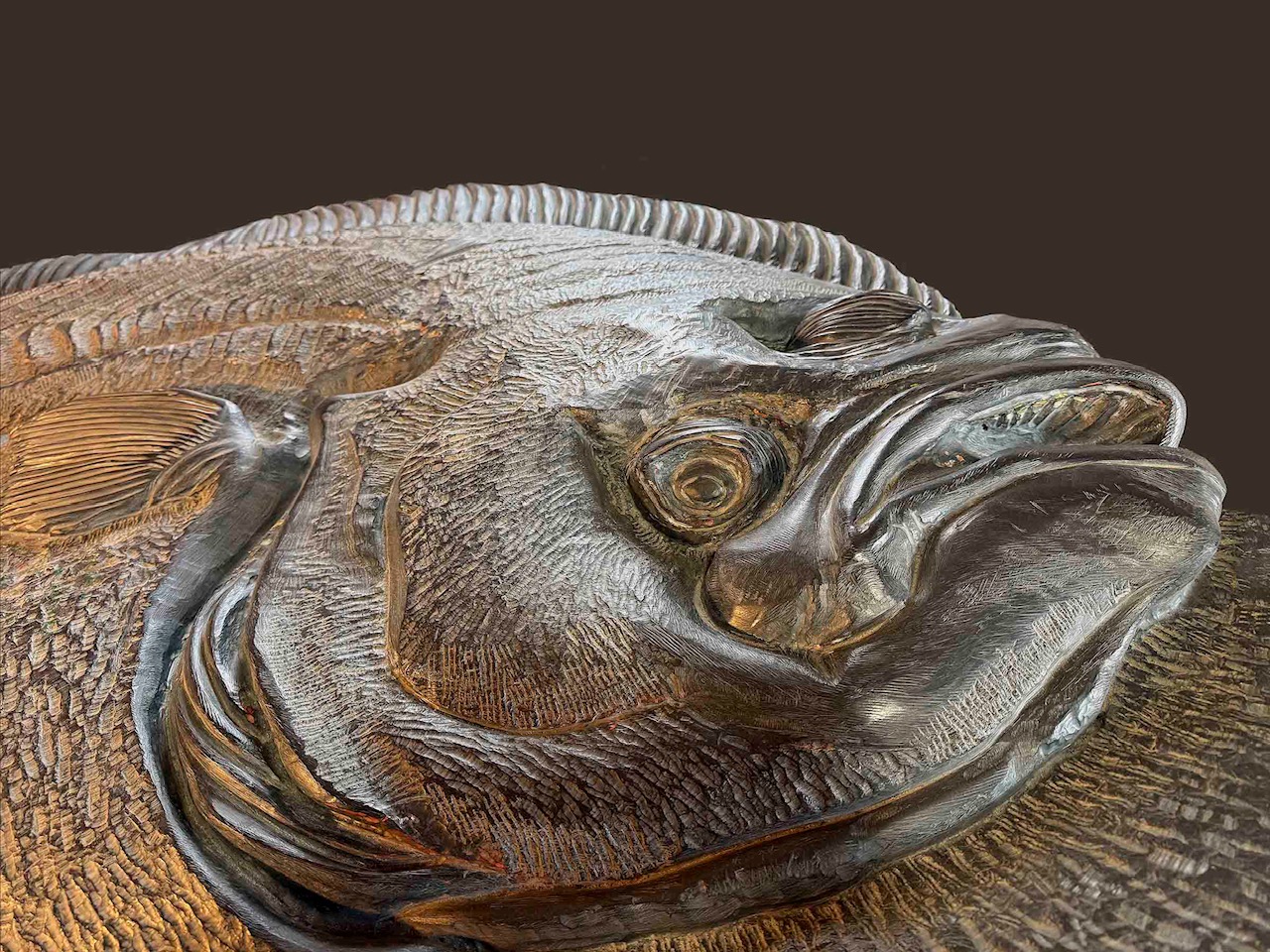
Slate sculptures are among the stars of the Monson Arts Gallery show, most notably Halibut, a 2,000-pound tabletop piece measuring nine feet long by five feet wide. The monumental Atlantic flatfish, modeled after a fish caught in Passamaquoddy Bay, lies on its side, its features rising from the dark surface: fanned fins, rounded lips, gnarly eye. To make an art-historical connection: a halibut also appears in Winslow Homer’s famous painting The Fog Warning (1885).
Literary connections
Pulitzer Prize-winning historian Doris Kearns Goodwin ’64 introduced Rothschild at the opening in June. She recalled how her late husband, noted Kennedy and LBJ speechwriter Richard Goodwin, called his close friend “the closest thing to Thomas Jefferson I have ever met.” She dedicated her 2024 memoir, An Unfinished Love Story: A Personal History of the 1960s, to Rothschild. Others present at the opening included Samantha Power, former U.S. ambassador to the United Nations, and Maine Governor Janet Mills.
Goodwin also highlighted Rothschild’s literary fame, which began when Viking Press published a collection of his short stories, Rhapsody of a Hermit, in 1974 and continued with the acclaimed novella Wondermonger, which appeared in Best American Short Stories of 1976. Scott Vile’s Ascensius Press in Portland has produced two editions of his writings, including Sculpture and Tales, printed on the occasion of the Monson show. The book is dedicated to Tory Hill and bears this note: “For fifty years lived upon you / we render up our gratitude.”
Born in Bangor, Rothschild briefly attended Bangor High School before transferring to Hebron Academy. A literature major at Colby, Rothschild recalled taking classes with Patrick Brancaccio, longtime chair of the College’s English Department. He also mentioned classics professor Peter Westervelt, who tried to convince him to spend his life learning Greek.
While at Colby, Rothschild acted in a number of theater productions under the direction of Irving Suss, English professor and director of dramatics. He played John Rosmer in Henrik Ibsen’s Rosmersholm and the murderous younger brother Mick in Harold Pinter’s The Caretaker.
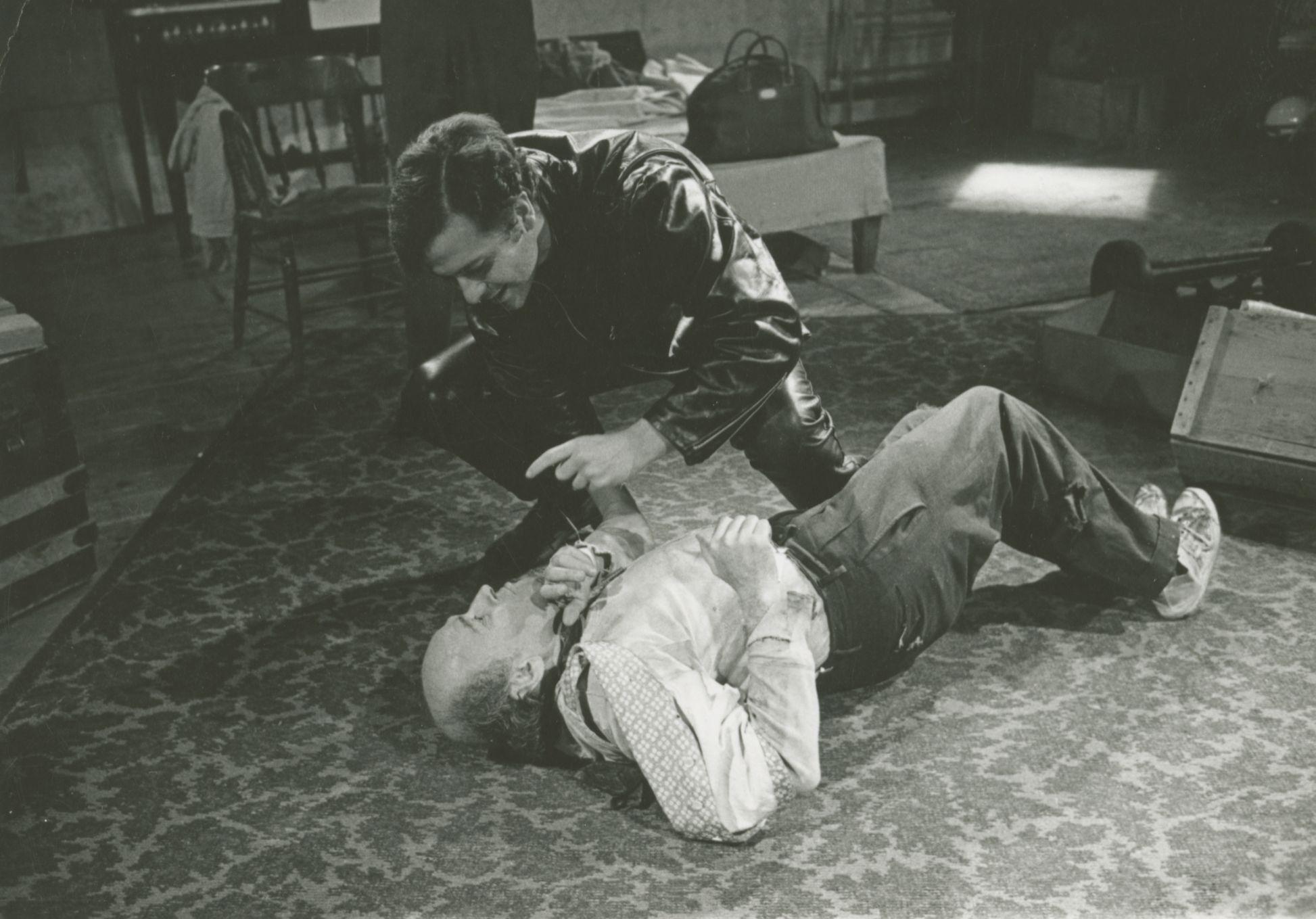
Rothschild also remembers watching first-year Earle Shettleworth Jr. ’70 perform in Percy Bysshe Shelley’s verse drama The Cenci. Interesting to note: Rothschild’s closest friend at Colby was Rocco Landesman ’69, who later became a Broadway producer (Big River, Angels in America, The Producers) and chair of the National Endowment for the Arts.
At one point, Rothschild lectured on fiction and sculpture at the Central Academy of Fine Arts in Beijing, Zian, and Nanjing, China. The opportunity came through his late son, Norman Harry Rothschild, who studied Chinese at Phillips Andover and Harvard and went on to become an eminent scholar of the Tang Dynasty. They traveled together to the Western mountains, a trip that remains a touchstone of Rothschild’s life.
A life in the woods
The last time Rothschild made such a splash in Maine was 1987, when John Cole, distinguished journalist and founding editor of Maine Times, wrote a profile of the then 39-year-old artist. Cole described a broad-shouldered, rugged-framed sculptor at work in his barn studio. He noted his penchant for wild creatures, and also for the female figure.
Knowing of Rothschild’s much-admired fiction, Cole asked, “Why does a writer leave the relative equilibrium of words and paper for the turbulence of physical struggle with nature’s most obdurate matter in an effort to grace its immobile forms with the illusion of animation?”
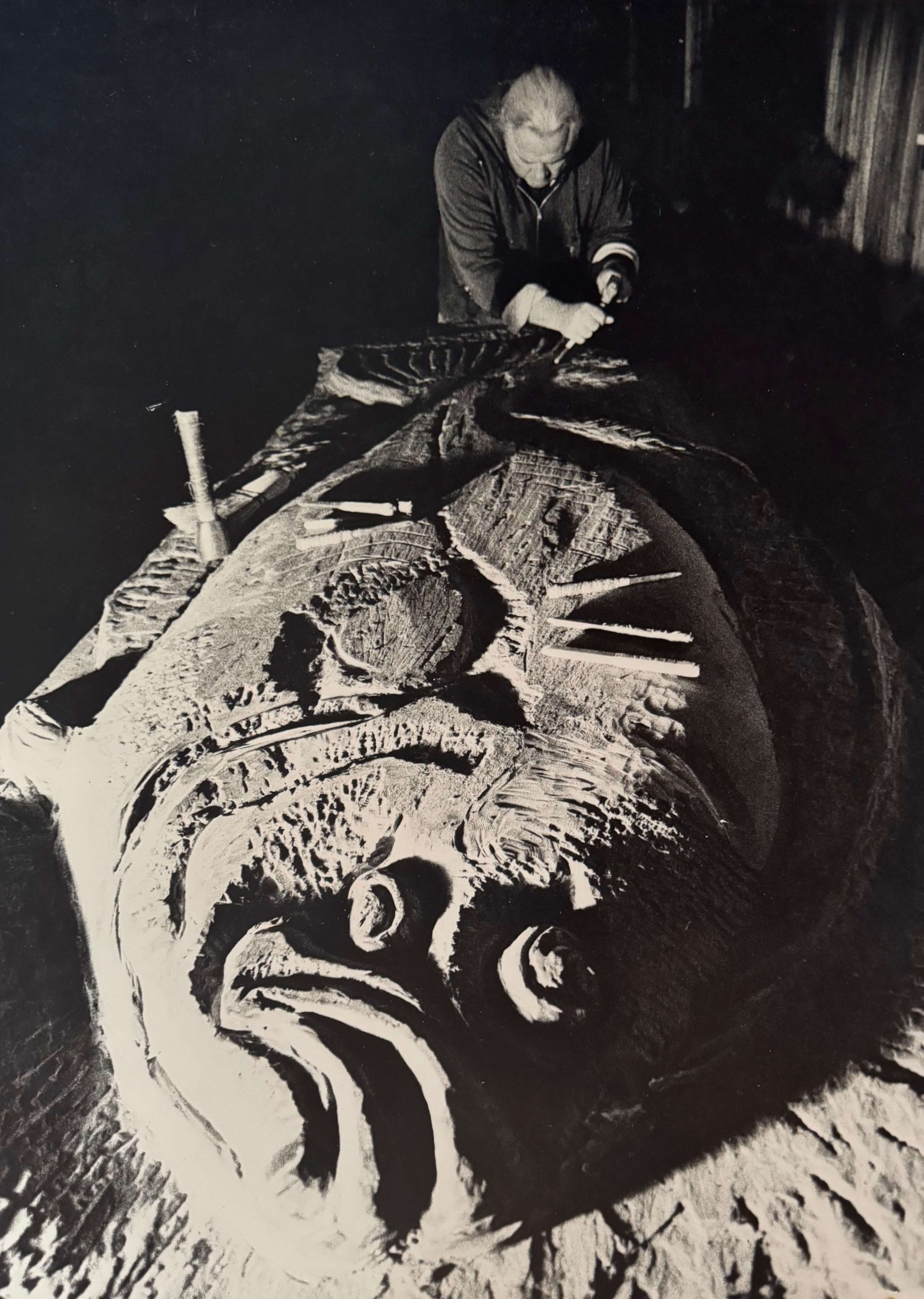
In an interview at the gallery four decades later, Rothschild addressed that question by telling stories of some of his creations. Turning to several renderings of a sturgeon, he recounted how one day he came across the skin of the fish mounted in the Harbor Fish Market on the Portland waterfront. The sighting prompted him to ask owner John Alfiero if he could supply a whole sturgeon. Curious about this paint-spattered man’s request, Alfiero consented and later delivered the fish, packed in ice, to the artist’s home in Strong. Rothschild later gave him one of the first prints made from the armored creature, which has been making a comeback in Maine rivers.
Rothschild also spoke excitedly about a slate snapping turtle that he is working on—another prehistoric-looking animal. He described how the shell will consist of 13 interlocking sculptures and how its large head will be made of lead. This sculpture, he averred, will be “as much of a snapping turtle as Picasso’s goat is a goat.”Rothschild has no regrets for choosing the quiet of the woods, the animals and farming. He and his wife, Catharine, raised their four children there. With help from Wendy Slaughter Fleming and other studio assistants, he has been able to fulfill a life in art far from the madding crowd.
In the course of the conversation, Rothschild kept returning to the importance of place, to Tory Hill. He described moving from the studio to pulling lambs and then returning with amniotic fluid and blood on his hands to begin sculpting again. “Of course,” he said, “you genuflect to this place that made your life possible with its apple wood, rock maple, butternut, with its barns and buildings.”
Rothschild’s devotion to Tory Hill brings to mind lines from Wendell Berry’s “A Poem of Hope:”
“Hope / then to belong to your place by your own knowledge / of what it is that no other place is, and by / your caring for it, as you care for no other place.”
That kind of caring lies at the heart of this remarkable man’s life and art.